
Architectural Salvage Near Me: Where to Find Reclaimed Wood in Massachusetts

Searching architectural salvage near me usually means you have a project in mind and need to find the right material, not just admire old boards online. Maybe you’re repairing a historic floor, building a focal wall, or looking for a beam with the right age and character.
Here’s how to find a reclaimed wood supplier in Massachusetts, what to ask before you buy, and how to make sure the material can work for your project.
Start with the project, not just the search
A nearby architectural salvage yard can be a great place to begin, but “near me” doesn’t always mean the closest shop is the best fit. Reclaimed inventory varies, and one supplier may specialize in boards while another focuses on architectural details or custom milling.
Before you call or visit, gather a few basics:
- What are you building or repairing?
- What species, color, thickness, or width are you hoping to find?
- How much material do you need?
- Does it need to be ready to install, or can it be milled?
- Can your project use natural variation, or does the material need to blend with something already in place?
Photos and measurements make the conversation easier. If you’re repairing an existing floor or trim detail, include close-ups and a photo of the whole room. Reclaimed boards can vary, so a picture helps a supplier understand what you mean by “similar.”
What to look for in a reclaimed wood supplier
When you’re looking for reclaimed wood near me, ask whether you can inspect the material, or see clear photos of the actual lot, not just a sample image of a previous project. A representative board can show grain and character, but the full lot reveals variation in width, color, and condition.
A reliable supplier should be comfortable explaining what they know about the wood and what still needs inspection. Ask about the material’s origin, species, preparation, and grading. If the history matters to your project, ask whether its provenance can be documented.
Look closely at the boards, too. Old nail holes and saw marks may be part of the appeal. Rot, severe checks, paint, oil, or uneven thickness may affect what you can use. Ask what preparation has already been done, and don’t assume “cleaned” or “de-nailed” means every board is free of hidden metal or defects.

Ask these questions before buying
A short conversation now can save you a second trip, or a mismatch later.
- Where did the material come from? Ask what is known about the original building or use, and whether the lot is mixed.
- What preparation has been done? Ask about nail removal, inspection for metal, cleaning, trimming, and any milling.
- What are the actual dimensions? Confirm thickness, width, and length, and ask whether those are rough or finished dimensions.
- What is the moisture condition? Ask whether the boards were kiln-dried, air-dried, or otherwise conditioned, and what the supplier recommends before installation. Suitability depends on the wood and where it will be used.
- How is the material priced? Lumber may be quoted by board foot, while flooring or paneling may be quoted by square foot. Ask which measurement the quote uses and what it includes.
- How much is usable? Find out whether the quoted amount is the rough total or the expected usable amount after damaged ends, defects, and milling are considered.
A board foot measures lumber volume; a square foot measures surface coverage. They aren’t interchangeable. For flooring or wall coverage, ask how much finished area the boards are expected to cover after milling and fitting.
What might an architectural salvage yard carry?
Inventory depends on the supplier, but architectural salvage sources may carry old-growth heart pine, antique planks, factory or mill beams, doors, mantels, trim, and hardware. Some yards sell material as-is; others can prepare or mill it for a particular use.
If you’re looking for heart pine or another specific species, ask how it was identified and what the supplier can tell you about its source. The name and story matter, but so do the board’s condition, dimensions, and suitability for your project.
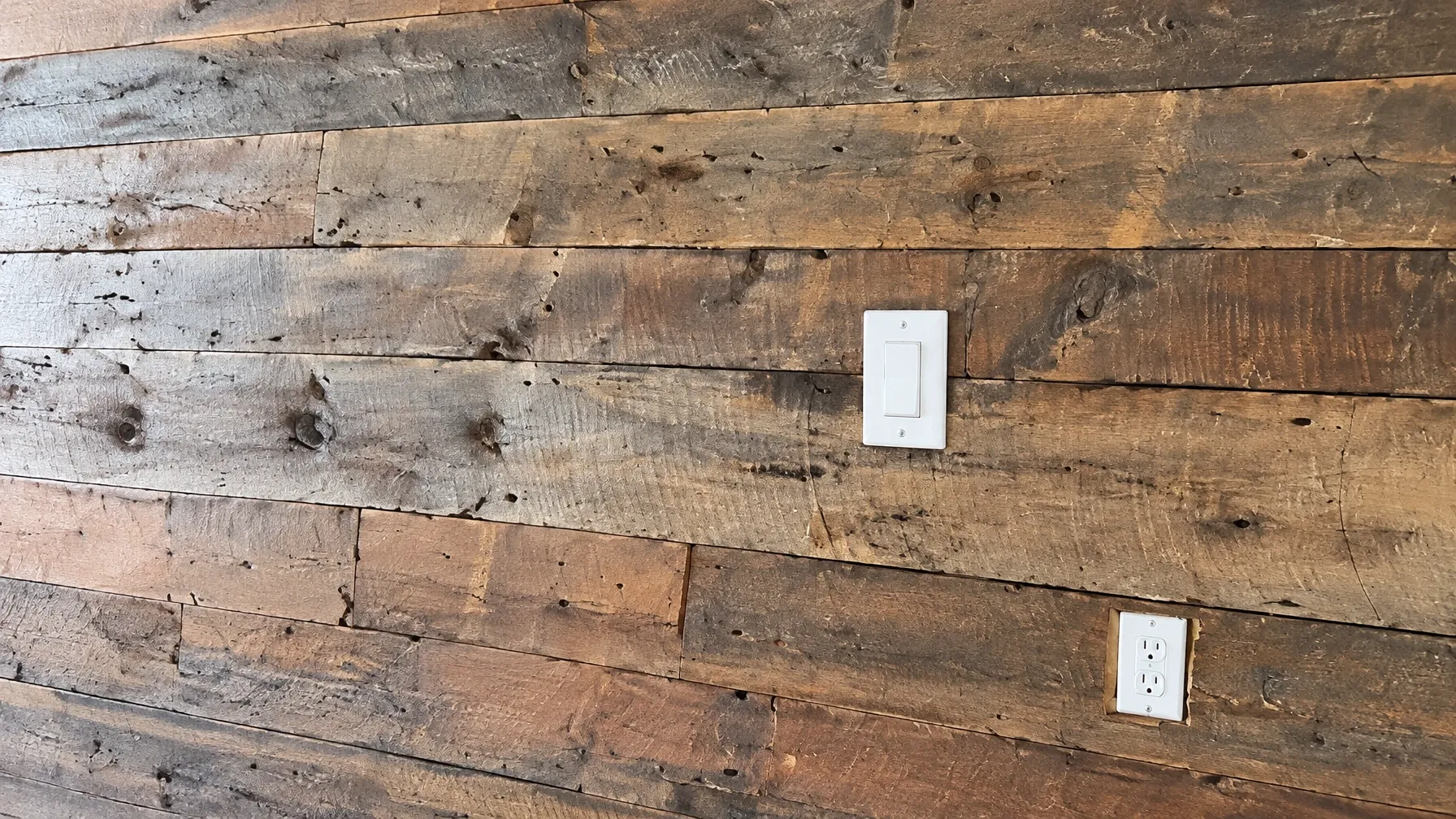
At Toy Town Vintage Salvage, our reclaimed wood story includes chestnut, wormy chestnut, and pine salvaged from the floors and walls of the original 1809 Toy Factory in Winchendon. You can explore our reclaimed wood or browse the gallery for examples of reclaimed materials and finished work.
Buying local, with less guesswork
A local salvage shop can help you talk through the actual material, rather than choosing from a standard new-lumber selection. That matters when you’re trying to keep the character of an older home or find boards with a particular profile.
At Toy Town Vintage Salvage, Sam can bring sample boards to your home so you can choose material in the space where it will be used. You don’t have to travel to the property just to compare samples. We serve customers throughout Massachusetts, ship material to other states, and install on site.
If the project involves an older floor, milling can matter as much as the wood itself. The right profile and dimensions depend on the existing floor and the material available, so start with photos and measurements. Learn more about custom-made flooring.
Salvage shop or big box store?
A big box store can be convenient when you need new, standardized lumber in familiar dimensions. A salvage shop is a better place to ask about material with a history, distinctive character, or dimensions that may not be available new.
Neither is right for every job. If you need a consistent, new product for a straightforward build, standard stock may suit you. If you’re restoring a historic home, matching old details, or looking for one-of-a-kind wood, a salvage supplier may be a better starting point. Ask what’s available now, what can be milled, and what your project will require.
For architectural details, custom work can also help bring the material together. Explore custom box beams and reclaimed focal walls.
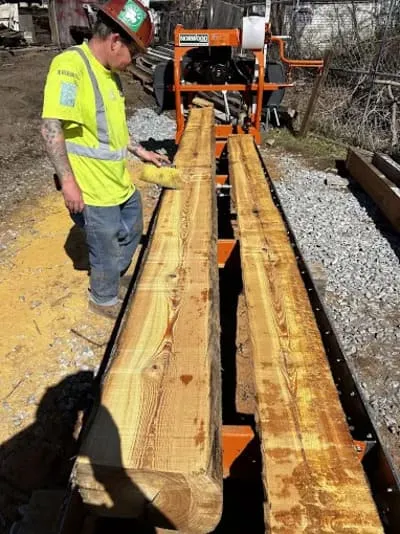
If you want to see this approach end to end, look at one of our recent projects: chestnut, wormy chestnut and pine reclaimed from the 1809 Toy Factory, remilled to a client's exact blend, and installed three flights up in a Quincy penthouse. Sam hand-picked every board, the shop milled them straight on an 18-foot rip line saw, custom vertical grain heart pine molding was fitted around every doorway, and a custom box beam was built and hung in the hallway. That is the difference between buying material and having a shop that sees the whole job through, from salvage to install. You can see the full project in our gallery.
A quick safety note about mantels and beams
A reclaimed mantel needs to be installed with the clearances required for your fireplace and local code; check with a qualified installer and the appliance manufacturer. Decorative box beams are not structural supports unless specifically designed and approved for that purpose. Have a qualified professional assess structural beams before altering or loading them.
Ready to find reclaimed wood near you?
Bring your measurements, project photos, and a short list of what you’re looking for. I’ll help you talk through the next step and whether our material or services might fit.
Request a free quote, call (978) 210-0221, or email sam@toytownvintagesalvage.com. You can also explore reclaimed wood and see what catches your eye.