Heart Pine Flooring: What It Costs and How to Match an Existing Historic Floor
If you’re researching heart pine flooring, you’re probably weighing two practical questions: What will it cost, and can it blend with the floor already in your home?
Both depend on the wood and the room. Heart pine varies from board to board, and matching an old floor takes more than choosing a similar-looking color. I’ll walk you through what to look for, what affects the quote, and what to send when you ask for help.
See how we handle custom flooring.
What heart pine actually is
“Heart pine” refers to the heartwood, the mature inner wood, of southern yellow pine. Historically, that can include longleaf and shortleaf pine, with old-growth longleaf heart pine especially prized for its tight growth rings and rich color.
Older trees grew over a much longer period than today’s plantation-grown pine. Their wood often has dense, closely spaced rings and a strong grain pattern. Heartwood can also be resin-rich, which may affect how the wood looks, feels, and responds to finishing.
Old-growth longleaf heart pine is no longer a routine commercial source. That’s why reclaimed heart pine is often the practical route when you want historic material or need to work with an existing old floor.
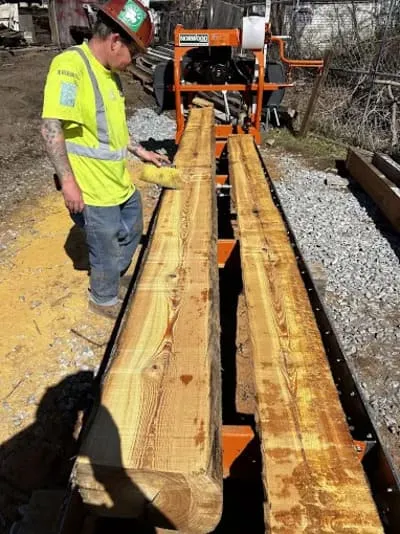
Toy Town salvages rare lumber, including wood from the floors and walls of an 1809 toy factory in Winchendon, Massachusetts. You can explore reclaimed wood and ask what material may suit your project.
Vertical grain or flat grain?
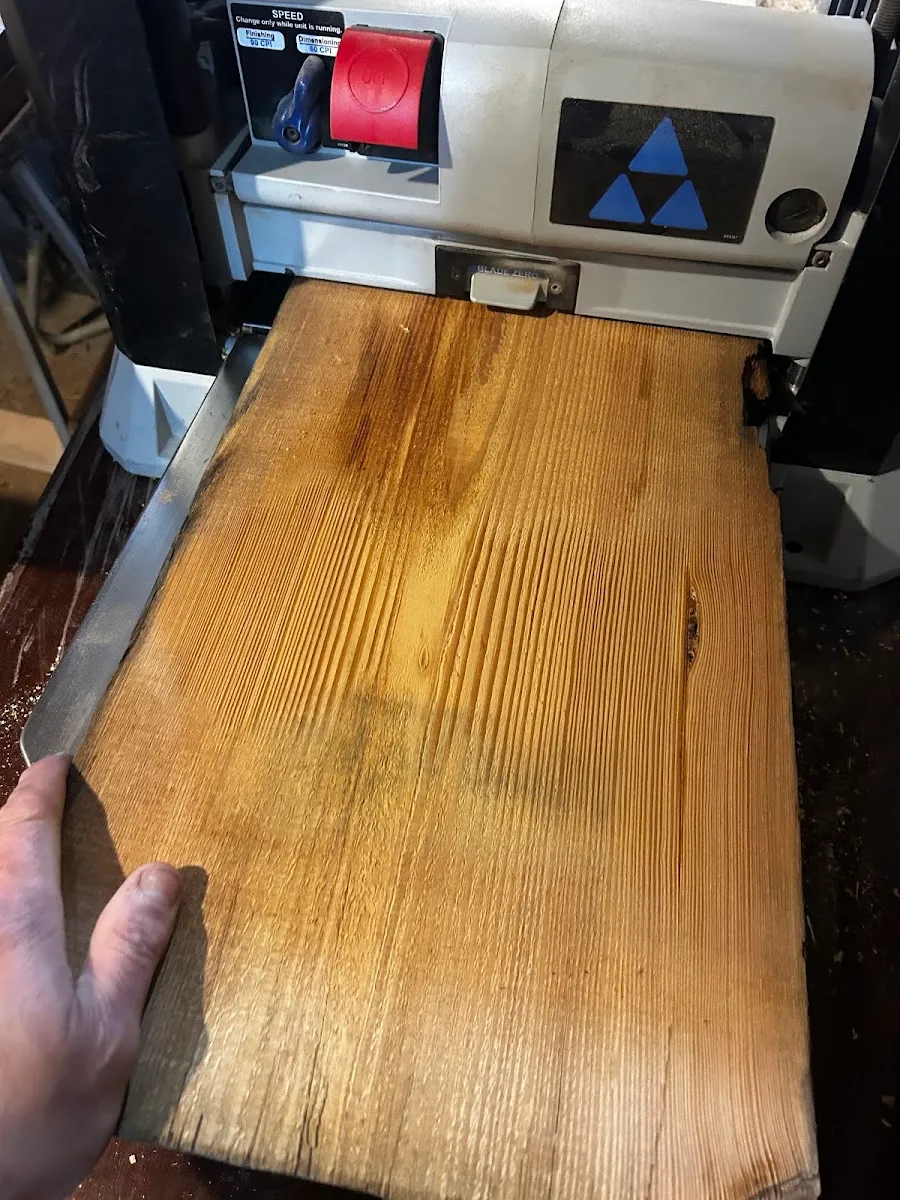
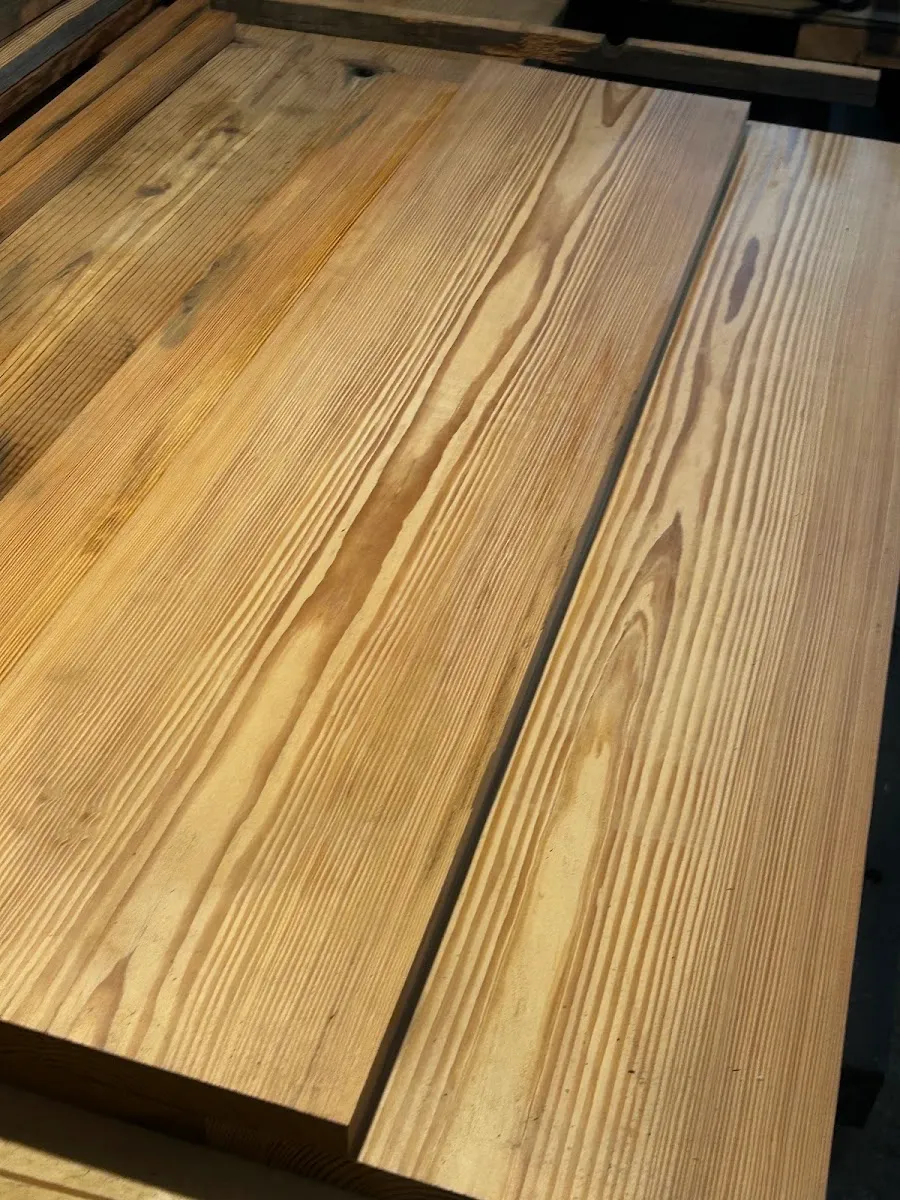
Look closely at the face of a board. Vertical grain heart pine usually shows tight, fairly straight lines. Flat-grain boards tend to show broader arcs or “cathedral” patterns.
These patterns come from how the lumber was cut. In vertical-grain boards, the growth rings meet the face at a steeper angle; in flat-grain boards, they meet at a shallower angle. Vertical-grain wood can be more stable across its width and may wear more evenly, though the performance of any floor also depends on the board, installation, and room conditions.
Vertical-grain material can command a premium because it’s less common and its consistent pattern is often sought for historic repairs. If you’re matching an old floor, grain direction matters: a straight-grain replacement next to flat-grain boards, or the reverse, may stand out even when the color is close.
What does heart pine flooring cost?
There isn’t one reliable price for every heart pine floor. Reclaimed lumber is often priced by the board foot; finished flooring is often priced by the square foot. A project quote depends on what you need and how much preparation the wood requires.
Common cost factors include:
- Wood and grade: species, grain, board condition, and the character you want.
- Milling: whether boards need tongue-and-groove edges, end-matching, or a custom profile.
- Size: board width, thickness, and available lengths.
- Finish: preserving a weathered look or milling the surface cleaner for a different appearance.
- Waste: reclaimed boards vary, so the usable yield matters.
- Labor and site conditions: installation, floor preparation, sanding, and finishing.
Ask for a quote that separates material, milling, and installation where possible. That makes it easier to compare options and understand what’s included. I offer free estimates with no consultation fee. Request a quote.
Can you match my existing floor?
Often, we can mill replacement boards and moldings from reclaimed stock to blend with an existing historic floor. But the honest answer depends on seeing the floor itself. A photo is a helpful start; a close look at the wood, dimensions, and profile is what lets us judge the job floor by floor.
For a useful assessment, check:
- Species and grain: Is the existing floor heart pine? Does it show vertical or flat grain?
- Ring pattern: How tight are the growth rings, and how consistent is the pattern?
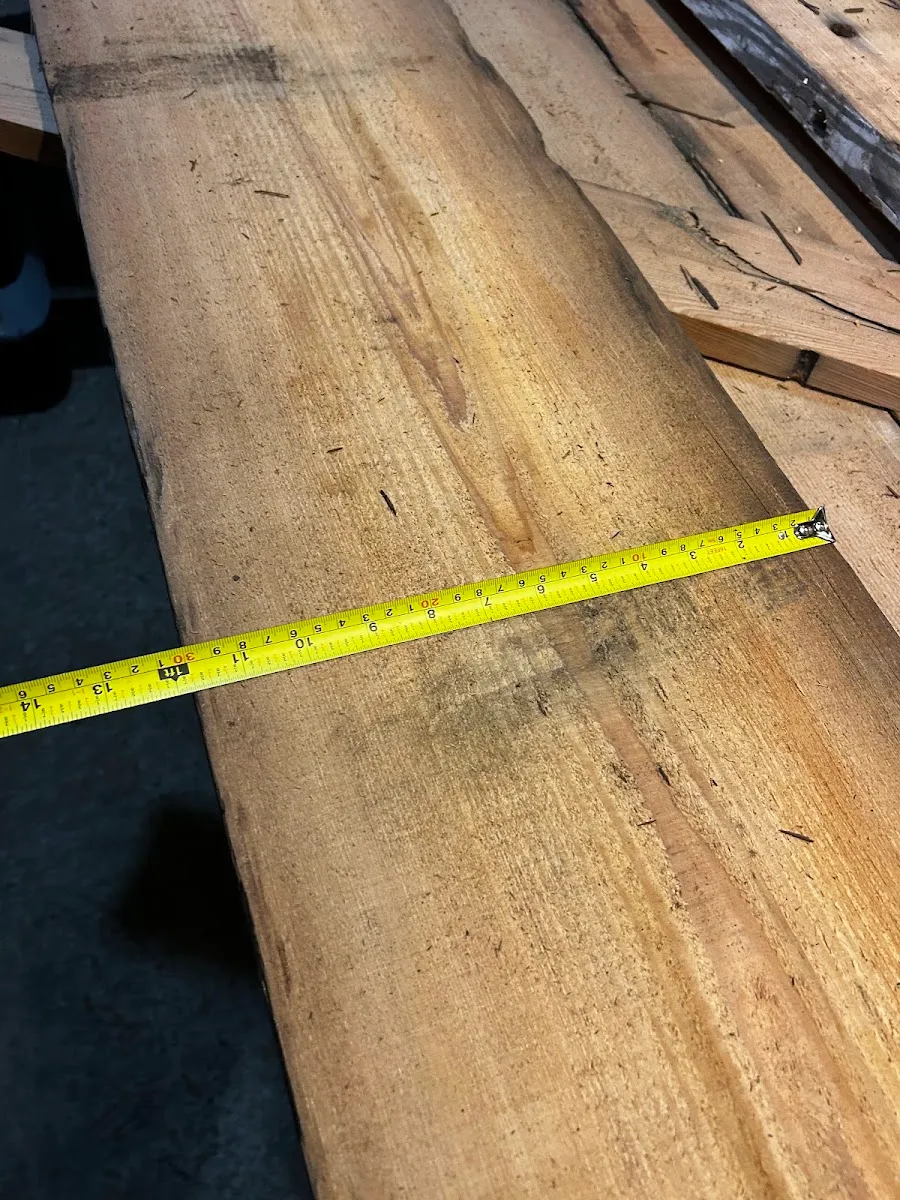
- Thickness: Measure the actual board, not just what you think it was originally. Old boards may have started near a nominal three-quarter inch but been milled thinner or worn down over time.
- Width and layout: Many old homes have boards in mixed or random widths. Note the face width of several boards.
- Milling details: Check the tongue-and-groove shape, tongue position, end joints, back relief, and any side bead or other edge detail.
- Surface and finish: Look at wear, patina, knots, nail holes, color, and sheen on the surrounding boards.
Staining new pine to imitate old heart pine often disappoints. Newer wood may have wider growth rings and different resin content. A stain can shift the color, but it can’t recreate decades of light, wear, and aging. The best way to judge a potential match is against the actual floor and, when possible, a sample.
A real historic-floor repair
One customer described a repair in her 120-year-old home, which had vertical-grain heart pine flooring:
“Sammy has done jobs for me in the past. Just recently, I had damage to the floor boards in my 120 year old house (which happens to be vertical grain heart pine) and he was able to remove and replace with the exact match that he custom made. I would highly recommend Sammy!!”
- Watermelon Girl, Google review
A customer restoring a 106-year-old Craftsman home also shared:
“Needed some old growth lumber for a 106 year old craftsman. The guys here know what they are doing. Found some beautiful lumber that I’m excited to install.”
- Frank P, Google review
Toy Town has a 5.0 rating across eight Google reviews, and every one of them is worth reading. See more finished work in the gallery.
New pine or reclaimed heart pine?
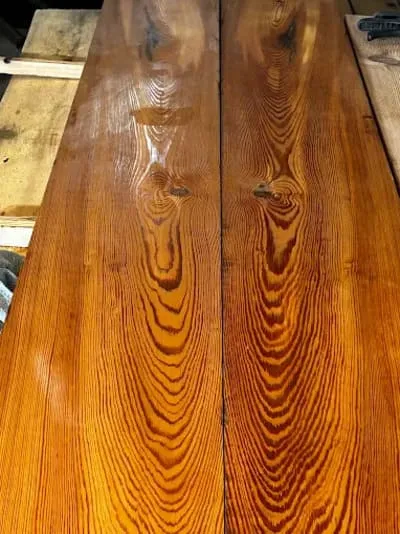
Modern plantation pine and reclaimed old-growth heart pine can look quite different. Faster-grown pine often has wider rings and a less dense appearance. Reclaimed heart pine may have tighter grain, aged color, and marks from its earlier use.
Neither choice is right for every project. New material may work well when you’re creating a new floor and want a consistent product. Reclaimed heart pine can be the better fit when you want historic character, or when you’re trying to blend a repair into an older floor. The wood’s actual condition, dimensions, and grain are what matter.
Installation and acclimation matter
Wood responds to changes in moisture and humidity. Before installation, the building and subfloor should be evaluated, and the installer should check moisture conditions in both the boards and the subfloor. Follow the flooring maker’s recommendations and the NWFA installation guidelines. Acclimation isn’t simply a set number of days; the right approach depends on the material and the conditions in the home.
For older homes, a qualified flooring or restoration installer can assess the subfloor, fastening approach, and how new boards will meet the existing floor. Toy Town offers custom milling and flooring services and can discuss on-site installation.
Safety note: Decorative wood beams and mantels are not automatically structural or fire-rated. Don’t use a decorative box beam as a load-bearing member, and follow fireplace clearance requirements for mantels. Ask a qualified contractor or local building official about your specific installation. Learn about custom box beams and reclaimed focal walls.
Get a useful quote
Send photos of the boards you need to match, a wider shot of the room, and the board width and thickness if you know them. A sample board is helpful, too. We serve Massachusetts, can bring sample boards to customers, and can ship materials to other states.
Request your free estimate, call (978) 210-0221, or email sam@toytownvintagesalvage.com. Tell me what you’re working with, and I’ll help you figure out a good next step.