
An 1809 Wall, Rehung: The Quincy Penthouse Project, from Salvage to Install
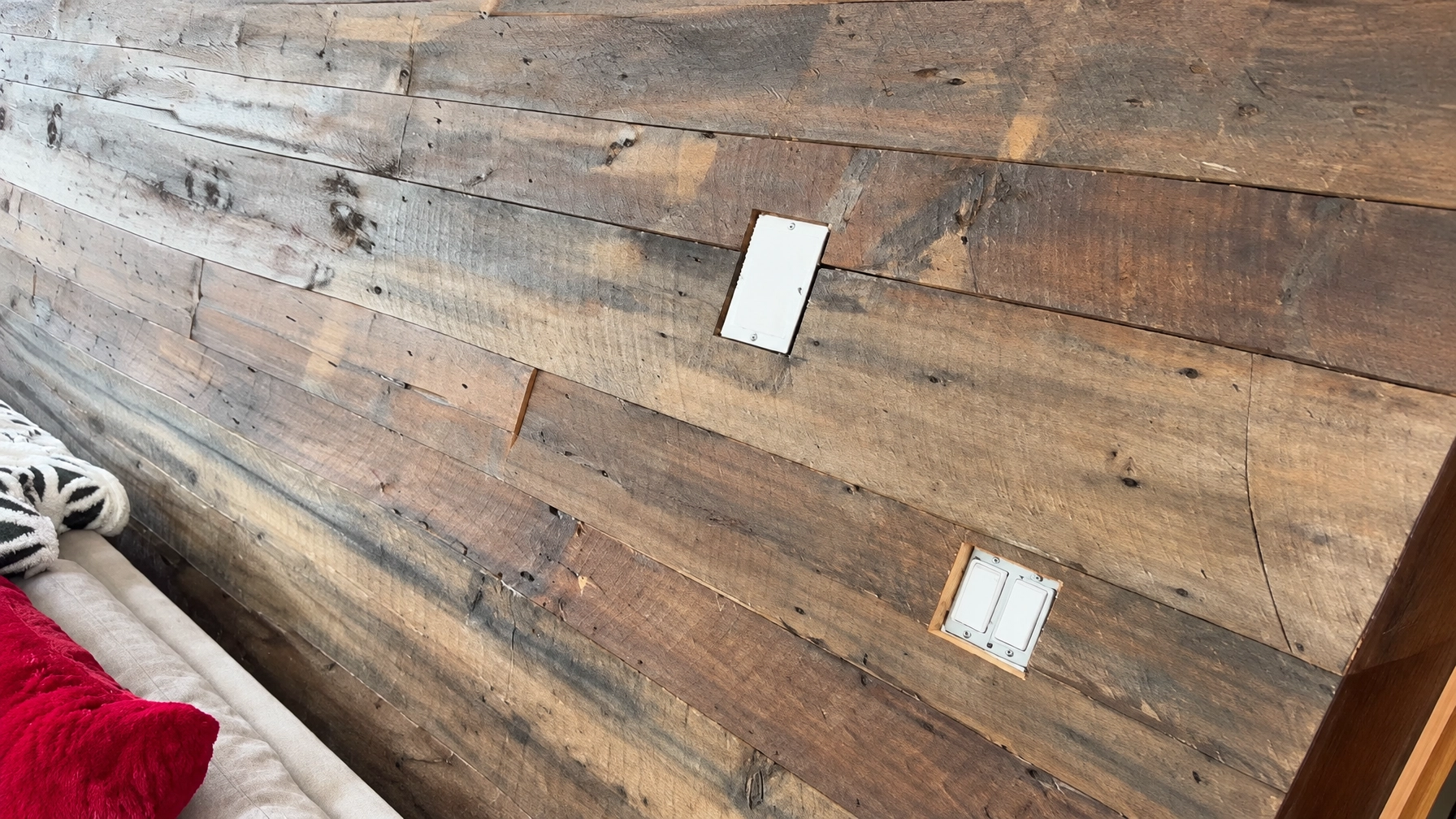
An 1809 wall, rehung three flights up in Quincy.
That’s the short version of this project. The longer one starts in Winchendon, Massachusetts, where boards were salvaged from the floors and walls of the original 1809 Toy Factory building. From there, they came back to our shop, were hand-picked and re-milled, then made their way to a Quincy penthouse suite.
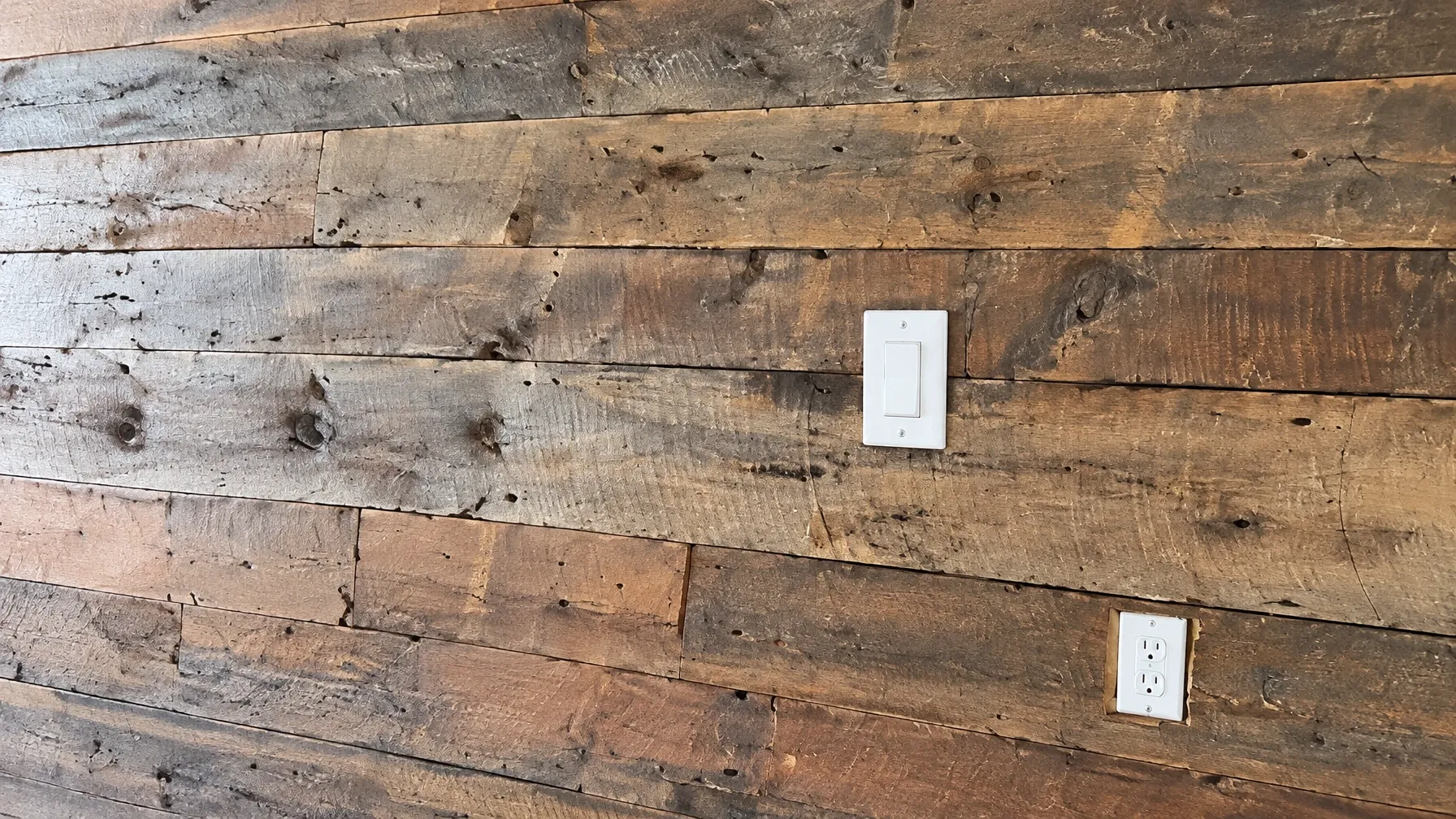
The finished work brought the old material into the hallways and great room, with custom heart pine molding around the doorways and a box beam in the hallway.
Wood with a real place behind it
The material for this job included 1809 chestnut, wormy chestnut and pine. These aren’t just names for a color or a style. The boards came from a specific building: the original 1809 Toy Factory in Winchendon.
That history is part of what makes reclaimed lumber special. Each board carries its own grain, marks and variation, and the material’s story connects a finished room to a real place. Chestnut from an early building is especially uncommon today. American chestnut was all but wiped out as a major timber tree after chestnut blight spread through the early 1900s. Because of that history, old reclaimed chestnut is a scarce material.
For this project, the wood was salvaged from the factory’s floors and walls board by board. The goal wasn’t to make every piece look the same. It was to give the client the custom blend they wanted while letting the natural character of the boards show through.
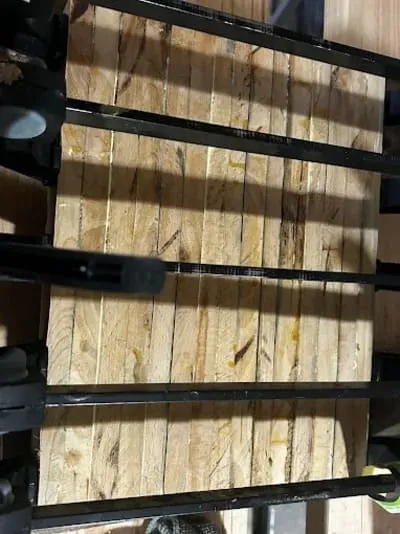
First, choose the right boards
I hand-picked each board to the client’s specifications. That means looking at the stock as a collection of individual pieces, not just a pile of lumber.
Color matters. So does grain, character and how one board will sit beside the next. Reclaimed wood brings natural variation, and that variation is part of its appeal. But you still need to make thoughtful choices to create a blend that feels right for the room.
This is one reason the process starts with a conversation. If you’re planning a reclaimed focal wall, tell me what you’re drawn to: lighter or darker tones, quieter boards or more visible character. We can talk through the look together and consider sample boards before settling on a direction.
Every project has its own needs. The right mix for a hallway may not be the right mix for a great room or a wall in a historic home. Selecting boards with the finished space in mind helps the material feel considered once it’s installed.
Back to the shop for the millwork
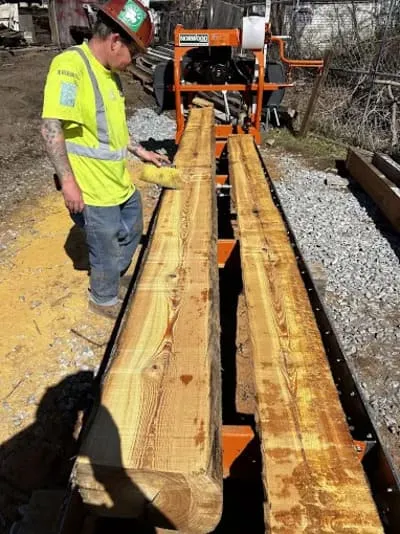
After salvage, I loaded the boards onto the truck and brought them back to the Winchendon shop. There, the material was re-milled on an 18-foot rip line saw to make the boards perfectly straight and help create the custom blend the client asked for.
Reclaimed lumber doesn’t arrive as a uniform, ready-made product. It has a previous life, and the stock needs to be worked with accordingly. Remilling gives us a chance to prepare the material for its new purpose while keeping the distinct character that made it worth saving.
That’s a shop capability, not a one-size-fits-all service. The boards have to be considered as a group, and the milling has to support the client’s vision for the finished space. The same care matters when we work on custom-made flooring, where preparation and milling help old wood become ready for a new room.
Three flights up, piece by piece
Once the material was finished, we delivered it to the client’s home and carried it up three flights of stairs, piece by piece. Then we installed it in the hallways and great room.
That part of a reclaimed-wood job is easy to overlook when you’re only thinking about the finished photograph. The material has to travel from the shop to the site, reach the rooms where it will be used, and be handled with care along the way. Here, the route included three flights of stairs before installation could begin.
The result wasn’t just a wall treatment on its own. The work extended through the hallways and great room, with the boards contributing to the finished rooms as part of a larger interior.
The trim and beam bring it together
The details around the reclaimed boards matter, too. For this job, I milled custom vertical grain heart pine molding to match and fitted it around every doorway.
Doorway trim meets the surrounding walls at a natural stopping point. When the material and proportions feel right there, the wood treatment looks more complete. Custom milling let us carry the job beyond the wall boards and into those finishing details.
We also fabricated a custom box beam in the workshop and installed it in the hallway. A box beam can bring the look of a heavy timber detail to a room without using one solid, heavy timber. The beam gives the ceiling a distinct feature while fitting into the broader design of the project.
If you’re considering a beam or reclaimed wood for your home, you can learn about our custom box beams. The right details depend on your space and what you’re hoping to achieve.
A safety note: box beams are decorative unless specifically designed and approved for structural use. Have their attachment and placement reviewed by a qualified professional. For a reclaimed mantel, follow the fireplace manufacturer’s instructions and applicable fire codes for clearances and installation; consult a qualified installer or local building official when needed.
One project, from salvage to install
The Quincy penthouse job shows how one project can move through the full process in one shop: salvage, hand selection, milling, delivery, installation and custom finishing details.
It also shows how reclaimed material can work across different parts of a room. This project included hallways and a great room, doorway casings, custom heart pine molding and a ceiling beam. One carefully planned approach helped the materials and details belong together.
That’s the thinking behind services like bringing sample boards to you and shipping and installing material on site. You can look at the wood in the context of your own project, talk through the blend you’re after and consider how the finished work will meet the surrounding architecture.
We’re proud of the care that goes into this kind of work. Toy Town has a 5.0 rating across eight Google reviews, and I appreciate every customer who takes the time to share their experience.
Have a space that deserves this kind of care?
If you’re planning a focal wall, a flooring project, custom trim or a reclaimed beam, let’s talk. Tell me what you’re working on, and I’ll help you figure out a good next step (no pressure, just a useful conversation).
Start a project or see the collection. You can also call (978) 210-0221 or email sam@toytownvintagesalvage.com.
Take a closer look at the Quincy project, and get in touch when you’re ready to talk about yours.